Fight on
Nobody Came Until Nine
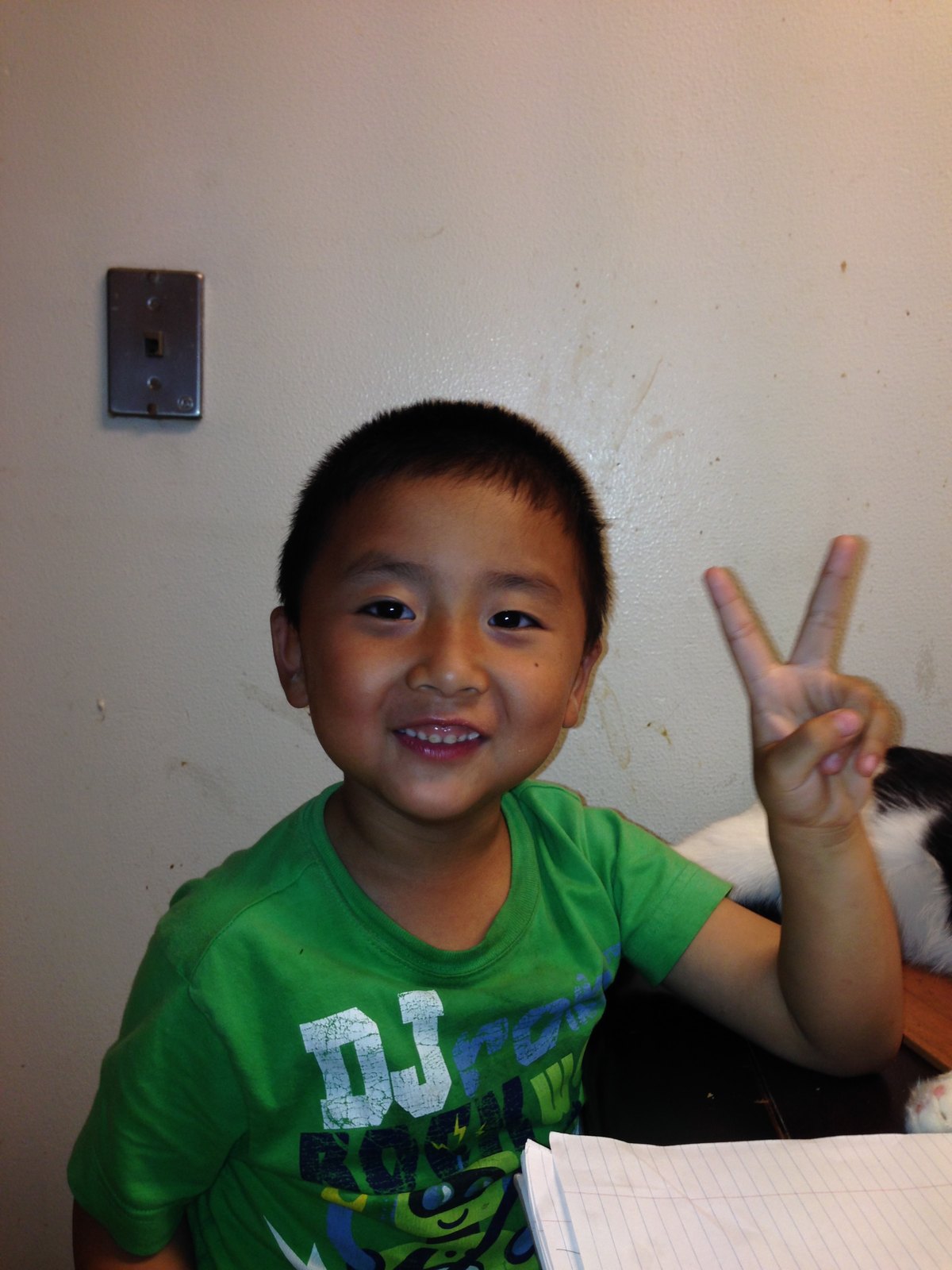
School let out at three. My mother’s shift did not end when other people’s shifts ended, so most days I had six hours to fill and no phone to fill them with, which meant I had six hours and a campus.
I learned that place the way you learn a house in the dark. I knew which trees held weight and which ones dropped you. I knew the patch of concrete behind the cafeteria that stayed warm until five and took chalk well, and I drew on it, badly, for years, and rain took all of it and I drew again. I knew every sound the building made as it emptied out, which is a strange thing for a nine-year-old to be an expert in.
And I knew the fields. There were always kids out there after the last bell, in cleats, in club uniforms, running the drills that cost money. I watched a great deal of that. I want to be accurate here: I did not resent it, or not for long. It was more that I understood early that there were two categories, and I could name which one I was in, and the naming was not painful so much as simply factual, like knowing your own height.
What I drew on that concrete was mostly the same three things over and over. A stadium. A house with far too many windows. And a car, always a car, always with two people in it, which is not subtle and I am not going to pretend I did not notice later what that was about.
The hard part was never the six hours. I would like to be very clear about that, because people hear this and assume the loneliness was the wound. It was not. I was fine. I was a boy in a tree with a stick and an entire school to myself, which at nine years old is closer to a kingdom than a punishment.
The hard part was nine o’clock, when the headlights finally came around the loop, and I got in the car and saw her face and understood immediately that her day had been worse than mine.
What it meant at Ranch 99
There is a particular arithmetic a child performs in a grocery store when he already knows the family condition. You do not ask. That is the entire skill. You walk the aisle, you see the thing, and you run a small silent calculation about whether asking would put a certain look on your mother’s face. The answer was usually yes. So you keep walking, and you say nothing, and above all you do not make it a moment.
I got very good at not making it a moment. I am genuinely unsure whether that was healthy. I am quite sure it has been useful.
What it meant on a Tuesday morning
I showed up to school in a shirt inside out more than once. Backward too, which is a different and meaningfully worse mistake. Nobody had checked, because the person who would have checked got home at seven and needed to sleep before she did it again.
So you learn to laugh first, and loudly, before anyone else can get there. If you say it, it is a joke. If they say it, it is something else entirely. I have used that reflex approximately every day since.
What it meant in sixth grade
I started answering my mother’s email in sixth grade. Not forwarding it to her. Answering it. Permission slips, school forms, fundraiser notices, the endless administrative weather of having children in America, all of it arriving in a language she was still fighting with at the end of a fourteen-hour shift. So I wrote back as her, carefully, in the politest English an eleven-year-old could manage, and I signed it with her name.
I did not experience that as unusual. I experienced it as my job. I think I was proud of it.
What it meant at the stove
I learned to cook young because the alternative was not eating. There was nothing charming about it. No adult stood behind me explaining heat. I burned things, and then over some months I stopped burning things, and nobody was there for either milestone.
What it meant on the way home
When practice ended and the parents pulled up in that long patient line, I ran. My friend’s house was about a mile. I ran it in cleats more than once. A ride was a thing you had to ask for, and asking was the single currency I was most careful with, so I spent my legs instead.
The honest inventory
Roughly in order:
I could not swim. Not slow at it, could not do it. Swimming lessons are something you pay for.
I could not play spikeball, and I was laughed at for that repeatedly, by people who were not being cruel so much as accurate. I am now the best spikeball player I know. I would like that on the record. It took an absurd number of hours and I regret none of them.
I was fat, and I was told so, in the specific unhurried way children tell each other things.
I had never played a down of football, and I signed up anyway, and I was put on the ground for about two years without meaningful interruption.
I picked up a lacrosse stick for the first time at a tryout, in front of people who had been holding one since they were eight, and the sound a group makes when it watches you fail at something easy is not a sound you forget.
Teachers wrote me down. More than one decided early that I was a troublemaker and then stopped updating the file. I was not a troublemaker. I was a kid with six unsupervised hours who talked too much, because talking was the only thing available that was free.
And my father was not a factor in any of this in the way that fathers are supposed to be.
Add it up and the fair summary of me at eleven is: not good at anything yet.
What I actually had
Three things, and I have spent real time thinking about this.
Spirit, which is a soft word for a hard thing. I did not stop. Not out of discipline. Stopping simply was not on the menu at my house, and by the time I was old enough to notice that other houses had it on the menu, I had already lost the taste for it.
A smile, and a real one. Not a performance. I liked people. I still do, embarrassingly much, and it has never once cost me anything.
A joke, always loaded, usually deployed about four seconds after something went badly and occasionally while I was still crying. If somebody in the room was having a worse day than I was, I would find the thing that made them laugh, and I would find it fast. That was the one skill I had before I had any others.
I never wanted to do anything wrong. That is the part nobody believed.
I wanted, more than almost anything available to want, to be good. Being read as trouble while you are trying that hard is a specific ache, and I would not wish it on a child, and I am not sure I would trade it either.
And then I got to USC
And found they had made a slogan out of it.
Fight On. Two words on every wall and every shirt, thrown up with two fingers, chanted by eighty thousand people who mostly mean it as encouragement for a football team, which is a perfectly good thing to mean by it.
I remember hearing it the first time and feeling something complicated, because it does not mean a cheer to me. It means nine o’clock in an empty parking lot. It means not asking at Ranch 99. It means an inside-out shirt and getting to the joke before anybody else can. It means writing your mother’s email in sixth grade, and learning the stove by yourself, and running a mile because asking for a ride costs something you have decided not to spend.
It means nobody is coming to make this easier, and you go anyway, and you go cheerfully, because bitterness is enormously heavy and I could never afford to carry any.
There is a version of this story where the boy is bitter, and I understand how you get there. All the ingredients are present. But I have met bitter people and they are so tired, and being tired is the one thing my mother never got to be, so it always felt like a strange thing to spend her money on.
I did not learn to fight on at USC. I learned it in a schoolyard at nine at night with a piece of chalk and nobody watching. USC only gave me the words for it, and I was glad to finally have them, because I had been doing the thing for about twelve years without knowing what to call it.
If any of this sounds like your childhood too, I would like to hear from you. fyruan@usc.edu